Collect · Observe · Repeat

Night Sky Passport

Your personal field guide to all 88 IAU constellations — charts, observation notes, and stamps from the real sky.

Quick Start

Step 1

Observe

Find a pattern under real stars — start with bright anchors.

Step 2

Log

Write Tier A notes on the spread — partial nights count.

Step 3

Stamp

Bring your passport to CAC events for stamps and stickers.

Tag Us for a Shoutout

Share Your Night Sky

Spotted a constellation, filled a spread, or collected a stamp? Post a photo and tag us — we love resharing your observing moments.

What Is This Passport?

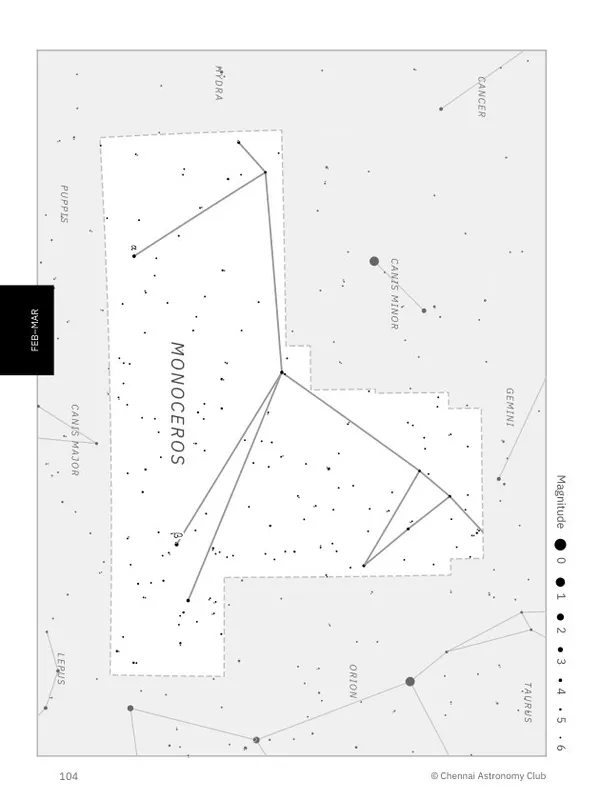
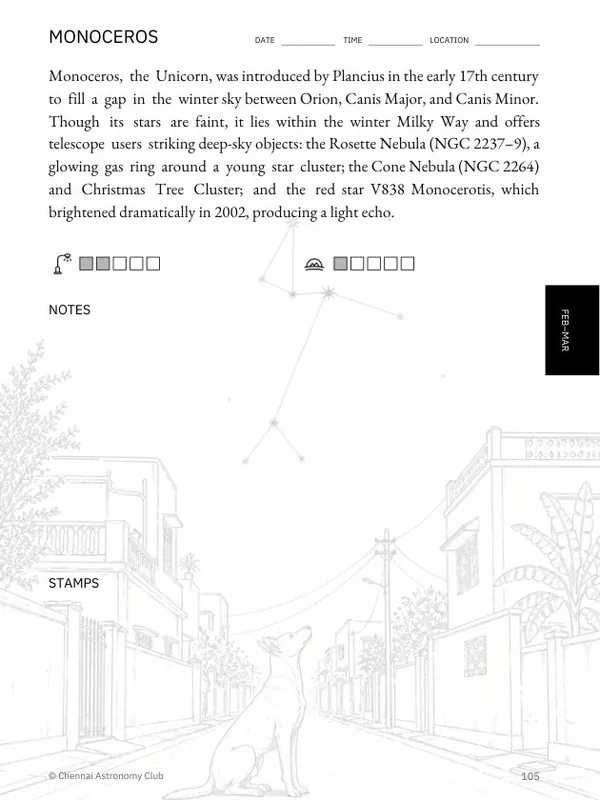
Sample passport spread left page — Monoceros star chart Sample passport spread right page — Monoceros notes and stamp space
Sample spread · Monoceros

A hands-on logbook for all 88 constellations — find a pattern in the real sky, write what you saw on the spread, and collect stamps at club events. The more you use it, the more familiar the sky becomes.

Star Charts

Stick figures, magnitude legend, and neighbour labels to orient you under real stars.

Field Notes

Date, place, sky conditions, and honest “maybe” entries — partial nights count.

Stamps & Stickers

Bring your passport to CAC events when you share a completed observation.

88
IAU Constellations
2
Pages Per Spread
2
Seasonal Parts

Stamps & Stickers

Volunteers stamp your spread when you share a completed observation — star parties, monthly meetups, and outreach events below.

Star Parties

Stargazing nights under dark skies outside the city.

Monthly Meetups

Regular club get-togethers for members and friends.

Workshops & Outreach

School sessions and special observing events — dates announced in the club group.

When to Get It Stamped

Bring your passport to any CAC event where you share an observation. Partial nights and honest “not sure” entries still count — the stamp recognises effort, not perfection.

How to Use This Passport

This book covers every official constellation. Work at your own pace — partial nights and honest “not sure” entries count.

How the Book Is Organised

Part I

October to March

Part II

April to September

In each section, anchor constellations marked ★ come first. Learn these bold patterns, then hop to nearby fainter ones. Other constellations are grouped by sky neighbourhood.

Each Two-Page Spread

Left page

Star Chart for the Constellation

Right page

Name, Short Context, Notes Area, Stamp Space

Reading the Charts & Observing

Start outside, not on the page. Give your eyes 10–20 minutes to adapt, avoid bright phone screens, and observe with the naked eye when you can. Dark, moonless nights are best.

  1. 1

    Start with the Shape

    Match the stick figure first — two or three key stars are enough.

  2. 2

    Use Bright Stars as Entry Points

    Larger circles mean brighter stars; trace outward to fainter neighbours.

  3. 3

    Read the Magnitude Legend

    Lower number = brighter star (reverse scale). Every chart includes the legend.

  4. 4

    Treat Labels as Hints

    If the page feels crowded, use only a few bright labels to orient yourself.

  5. 5

    Check the Neighbours

    Nearby names and boundaries confirm you are in the right part of the sky.

  6. 6

    Use the Page as a Field Notebook

    Write what you saw, what was unclear, and what to re-check next time.

Cannot Find the Constellation?
  • Start from a nearby bright ★ anchor and hop to the target.
  • Check for haze, cloud, moonlight, glare, or blocked horizons.
  • Try again 30–60 minutes later.
Planetarium Apps

Apps like Stellarium are fine to get started. Use red-night mode and low brightness. Once you recognise a few patterns, put the screen away and star-hop with the book.

All-Sky Charts

Hold the all-sky chart overhead and point chart-north to real north. When the chart faces upward like the sky, east and west align with the real sky.

Difficulty Ratings

Each spread shows two quick ratings to help you pick targets for the night:

  • Light pollution — how much city skyglow hides the pattern.
  • Horizon — low altitude, murky air, or blocked sightlines.

Both use the same scale: 1 = easiest, 5 = hardest. From Chennai, start with lower numbers; try higher ones on darker, clearer nights.

Writing Useful Observation Notes

Record what happened at your spot — not labels copied from the chart. A sky-only fact is something only your eyes could know: which stars were visible, how low the pattern sat, where glare interfered, or which anchor helped you find it.

Tier A — Always

  • Date and time
  • Place and sky condition (clear, hazy, thin cloud, bright moon)
  • What you confirmed, missed, or could not hold
  • Confidence: Certain / Maybe / Not sure

Tier B — If You Have a Minute

  • One more sky-only fact
  • One obstacle (light, haze, cloud, building, moon)
  • One thing to re-check next session

Partial nights count. “Maybe,” “Not sure,” and “clouded out after ten minutes” are valid observations.

Example Notes

  • Weak: “Saw Orion. Nice.”
  • Better: “8:40 pm, terrace, haze south. Found belt first; shield stars unclear. Confidence: Maybe. Re-check at 9:10 pm.”
  • Honest miss: “9 pm, balcony, thin high cloud. Could not hold the faint pairs; stopped before moonrise. Confidence: Not sure. Re-check on a clearer night.”

Ongoing Badges, Stamps & Challenges

Complete challenges in the real sky, log them in your passport, and collect recognition at CAC events when available.

How Challenges Work

All challenges below are ongoing.

  • Log — Tier A notes on the spread (date, place, sky condition, confidence).
  • Count — Each constellation or star counts once.
  • Recognition — Optional stamp or badge at CAC events (Stamps & Stickers).
  • Sky — Naked eye or binoculars unless a challenge says otherwise.

Faint target? Start from a ★ anchor and star-hop — see Cannot Find the Constellation?

Constellation Milestones

1 First Anchor 1 constellation
10 Pattern Reader 10 constellations
25 Season Bridge 25 constellations
50 Half-Atlas Watcher 50 constellations
75 Faint-Sky Chaser 75 constellations
88 Atlas Keeper 88 constellations

Write Tier A notes on each spread you attempt. Each constellation counts once. Partial or “not sure” nights still count toward the spread you tried.

Work season by season and return to faint targets on darker nights. Use anchor ★ constellations and all-sky charts to link sections across the year.

Browse All Challenges →

Feedback

Questions about the passport, typos, stamps, or challenges? We would like to hear from you.

Send Feedback →

Include the constellation or page if relevant.